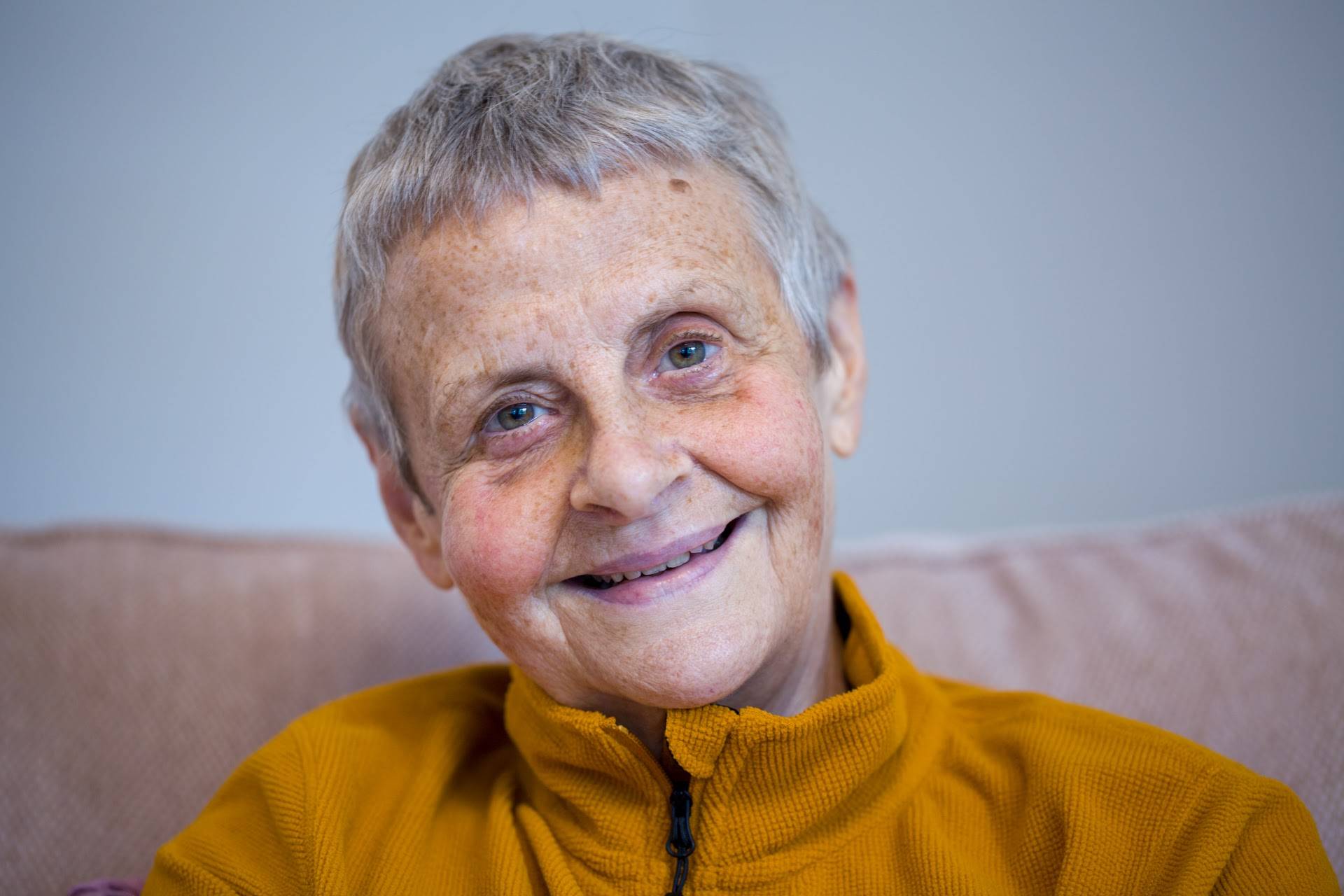
Wendy Mitchell was the best-selling author of three books about her experience of living with young-onset dementia. She was diagnosed in 2014 at the age of 58 and dedicated her life until her death in February 2024 to raising awareness of the condition and advocating for a cultural shift in how life after diagnosis is approached and perceived. Here she talks to us about the importance of travel and the balance between familiarity and novelty for living your best life with dementia.
One of the biggest hurdles you face when you’re diagnosed with dementia is other people and the general attitude to dementia. It can be a very negative focus on what you can’t do, rather than on what you can, and can give a false impression of what is and isn’t possible. Your life shouldn’t be seen as being over just because you’ve been diagnosed with dementia — there may be some new challenges but you can still live well and be involved in life. This is why keeping connected is a huge bonus when you have dementia. It’s so important not to lose that feeling of being normal and still getting involved in “normal” things.
For me, it’s been essential to get out into the world. When you’re stuck inside four walls, dementia is in close proximity and you can end up feeling handcuffed to it. When I’m outside, I’ve got the world at my feet and it pushes dementia out of the way. Having this sense of freedom is vital.
My paradise is Keswick in the Lake District. I go to the same B&B every month and the owner is very sensitive to my situation. She puts a pillowcase over the TV in my room, because otherwise it looks like a black hole to me, and she is careful to ensure there is colour contrast between the tablecloth and the plates and cups when I go down to breakfast in the morning. She also puts a jar of tea bags in my room rather than those fiddly little packets that I have difficulty opening. Little things like this make a huge difference to my experience of being there and my ability to stay away from home on a regular basis. They’re easy and inexpensive adjustments for her to make, as well. People often don’t realise, I think, that small changes can make a big difference.
Going to the Lake District and staying at “my” B&B gives me the best of both worlds: I’ve got the familiarity of staying at the same place every time, where I feel safe, in an area of the country I know and love, but with the novelty of getting out and exploring and experiencing things I may not have seen before. Having that safety and familiarity in place helps me have the confidence to get out and enjoy new experiences. I still want adventure in my life and I’ve taken the risk of trying some wonderfully enriching new things since I was diagnosed with dementia — including jumping out of a plane at the age of 63!
This balance is important when I’m at home as well. During Lockdown, my routine suddenly disappeared. Routine is essential for people with dementia. Before the pandemic, I’d been travelling regularly and had a routine in place; then all of a sudden it came to a stop and my routine was gone. Like so many other people, I was in a pretty bad place for the first few weeks. Then one morning I saw a camera on my bedroom floor and had the idea that I could start to use that as part of a new routine. This began my daily walks out into the village and taking pictures along the way.
For a while, I’d been using photographs as a way of “plotting” routes in new places so, for example, if I was giving a talk in a city that was new to me, I would take photographs on the walk from the train station to the venue. These pictures would help me check I was going in the right direction later in the day when I was walking back to the station. Spotting my camera on the bedroom floor that day made me think I could start doing a similar thing in my local neighbourhood. So I started a routine of going for a daily walk and taking photographs along the way, partly to document what I was seeing, partly to help “plot” a map of the area in my own mind so it would be easier for me to find my way around. I then began posting some of the photos on the village Facebook group. People who were shielding started to say my photos helped them to see the outside world and what was going on in the village — it helped them feel more connected. Doing that, day after day after day, meant that people saw my talent first before realising I had dementia. This meant they saw dementia in a whole new light because they’d seen the person first and hadn’t defined me by my diagnosis.
This routine led to a local exhibition of the photos. The exhibition was called People With Dementia Can and is now actually on a UK-wide tour along with some accompanying poetry written by a friend of mine. My photographs capture the mood of his poems. You never know where taking a calculated risk can lead!
That daily walk that includes taking photos along the way and putting them on the village Facebook page is still part of my routine now. It’s that balance of the familiar and the new. It helps me feel alive and engaged in the world and just makes me feel like I’m starting off the day right.
Dementia brings challenges. Of course it does. But when we’re allowed to speak, when we’re seen as the person rather than the diagnosis first, when we’re not wrapped up in cotton wool or treated as if we’re just waiting to die, and when we’re supported to take calculated risks, we can continue to enjoy life and make a valuable contribution. That can only be a good thing, not only for people living with dementia but for the people around them, too.
____________________________________________
Wendy’s books are: Somebody I Used to Know (2019); What I Wish People Knew About Dementia (2022); and One Last Thing. How to Live Well With the End in Mind. (2023).